


On demand
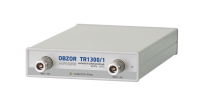
- Frequency Range: 0.3 to 1300 MHz
- Measured Parameters: S11, S21
- Dynamic Range of Transmission Coefficient Measurement: More than 130 dB
- Minimum Measurement Time at One Frequency: 150 µs
- Output Power Adjustment Range: from -55 dBm to +3 dBm
Warranty: 1 year
Description
On demand
Price Options
On demand
Add to cart
On demand
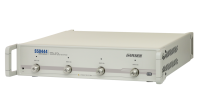
- Frequency Range: 10 MHz…44 GHz
- Measured Parameters: S11 ... S44
- Impedance: 50 Ω
- Number of Ports: 4
- Dynamic Range of Measurements: 135 dB typical
- Measurement Time at One Frequency: 22 µs
- Output Power Adjustment Range: from -50 to 0 dB/mW
- 19'' Rack Mountable
Warranty: 1 year
Description
On demand
Price Options
On demand
Add to cart
On demand
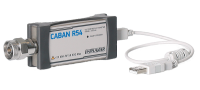
- Operating frequency range: from 85 MHz to 4.8 GHz (typical 5.4 GHz)
- Measured parameters: S11, cable loss
- Impedance: 50Ω
- Number of ports: 1
- Dynamic range: not less than 97 dB
- Measurement time at one frequency: 200 µs
- Output power: -30; -10 dB/mW
- Measurement of S11, |S21|, |S12|, S22 (when using 2 reflectometers)
- Connection to devices without measurement cable
- The smallest and lightest among the CABAN series reflectometers
Certificate of Approval of Type of Measuring Instruments by the Russian Federation No. 55466
1-year warranty
Description
On demand
Price Options
On demand
Add to cart
On demand
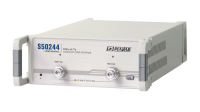
- Frequency Range: 10 MHz…44 GHz
- Measured Parameters: S11, S21, S12, S22
- Impedance: 50 Ω
- Number of Ports: 2
- Dynamic Range of Measurements: 135 dB typical
- Measurement Time at One Frequency: 22 µs
- Output Power Adjustment Range: from -50 to 0 dB/mW
- 19'' Rack Mountable
Warranty: 1 year
Description
On demand
Price Options
On demand
Add to cart
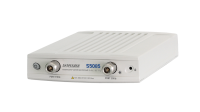
On demand
- Frequency range: from 9 kHz to 8.5 GHz
- Measured parameters: S11, S21, S12, S22
- Measurement dynamic range: 135 dB
- Measurement time at one frequency: 70 µs
- Minimum frequency step size: 1 Hz
- Measurement filter bandwidth: from 1 Hz to 100 kHz
Warranty: 1 year
Description
On demand
Price Options
On demand
Add to cart
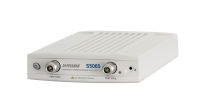
On demand
- Frequency range: from 9 kHz to 6.5 GHz
- Measured parameters: S11, S21, S12, S22
- Measurement dynamic range: 135 dB
- Measurement time at one frequency: 70 µs
- Minimum frequency step size: 1 Hz
- Measurement filter bandwidth from 1 Hz to 100 kHz
Warranty: 1 year
Description
On demand
Price Options
On demand
Add to cart
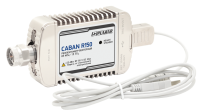
On demand
- Operating frequency range: from 85 MHz to 15 GHz
- Measured parameters: S11, cable loss
- Impedance: 50Ω
- Number of ports: 1
- Dynamic measurement range: 115 dB (up to 5 GHz) / 90 dB (above 5 GHz)
- Measurement time at one frequency: 170 μs
- Output power: -25; 0 dB/mW
- S11 measurement
- Connection to devices without measurement cable
- Compact and lightweight
Description
On demand
Price Options
On demand
Add to cart
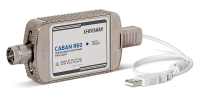
On demand
- Operating frequency range: from 1 MHz to 6 GHz
- Measured parameters: S11, cable loss
- Impedance: 50Ω
- Number of ports: 1
- Dynamic range: not less than 109 dB
- Measurement time at one frequency: 100 µs
- Output power adjustment range: from -40 to 0 dBm
- Measurement of S11, |S21|, |S12|, S22 (when using 2 reflectometers)
- Connection to devices without a measuring cable
- Compact and lightweight
1 year warranty
Description
On demand
Price Options
On demand
Add to cart
On demand
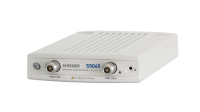
- Frequency Range: from 9 kHz to 4.5 GHz
- Measured Parameters: S11, S21, S12, S22
- Dynamic Range of Measurements: 135 dB
- Measurement Time at One Frequency: 70 µs
- Minimum Frequency Step Size: 1 Hz
- Measurement Filter Bandwidth: from 1 Hz to 100 kHz
Warranty: 1 year
Description
On demand
Price Options
On demand
Add to cart
On demand
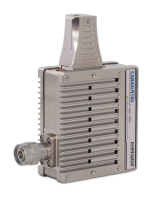
- Operating frequency range: from 1 MHz to 18 GHz
- Measured parameters: S11, cable loss
- Impedance: 50Ω
- Number of ports: 1
- Dynamic range: 110 dB (<6 GHz) / 94 dB (>6 GHz)
- Measurement time at one frequency: 100 μs
- Output power adjustment range: from -15 to 0 dB/mW
- Measurement of S11, |S21|, |S12|, S22 (when using 2 reflectometers)
- Connection to devices without measurement cable
- Compact and lightweight
1 year warranty
Description
On demand
Price Options
On demand
Add to cart
On demand
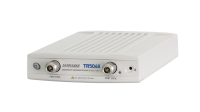
- Frequency Range: from 0.02 to 4800 MHz
- Measured Parameters: S11, S21
- Dynamic Range of Transmission Coefficient Measurement: More than 120 dB
- Minimum Measurement Time at One Frequency: 200 µs
- Output Power Adjustment Range: from -50 dBm to +5 dBm
- The TRVNA program includes a demonstration mode to familiarize with its features
Description
On demand
Price Options
On demand
Add to cart
On demand
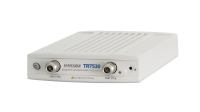
- Operating frequency range: from 0.02 to 3000 MHz
- Measured parameters: S11, S21
- Dynamic measurement range of transmission coefficient module exceeds 120 dB
- Minimum measurement time at one frequency: 200 µs
- Output power control range from -50 dBm to +5 dBm
- The TRVNA program includes a demonstration mode for familiarizing with its features
Warranty: 1 year
Description
On demand
Price Options
On demand
Add to cart
Vector Network Analyzer (VNA), also known as Vector Network Analyzer or Complex Transmission and Reflection Coefficient Meter (VNA), is an effective measuring instrument that ensures high measurement accuracy. Vector network analyzers are designed to evaluate the total resistance or scattering and reflection characteristics of active and passive circuits, such as amplifiers, frequency converters, antenna switches, filters, switching devices, attenuators, and many other components used in various schemes.
Vector network analyzers (VNA) are the most powerful in their group as they measure and display the complete set of amplitude and phase characteristics of the circuit. These parameters include S-parameters, transfer functions, amplitude and phase, standing wave ratio (SWR), inserted attenuation or gain, attenuation, group delay, reflection losses, or reflection coefficient.
The principle of operation of the network analyzer is based on the separate extraction and comparison of signals: the incident signal, passed through the device under test, and the signals reflected from the inputs of this device using directional couplers, forming voltages proportional to these signals, further digital processing, and indication of the measured values.
The device includes one or more synthesized signal probing sources, S-parameter measurement equipment, and adjustable receivers of reflected and transmitted signals through the device under study.
PLANAR offers various network analyzers with different ranges of operating frequencies, functional characteristics, and versatility necessary to solve user measurement tasks.
PLANAR vector network analyzers are available as single-port vector reflectometers as well as two- and four-port ones with a frequency range up to 110 GHz. Due to high hardware and software flexibility, PLANAR network analyzers are ideal for complex testing systems used in industrial production. Analyzers with switches located on the front panel allow configuration for solving specific measurement tasks. Direct access to the generator/receiver opens up wide possibilities for configuring external measuring equipment. For example, to improve the harmonic distortion coefficient, several filters can be connected in series, and to increase the output power, several amplifiers. Such capabilities are essential in systems for measuring the nonlinear characteristics of amplifiers, electronic switches, and modules for switching the antennas of mobile radio stations.
Using PLANAR vector network analyzers, it is possible to perform:
The network analyzer is a calibrated closed system according to the "impact–response" principle, which is why the measurement of microwave characteristics is carried out with exceptional accuracy. Due to the architecture and algorithm of operation of the vector network analyzer, errors are taken into account in high-precision measurements of the amplitude and phase of signals. The small size of the error may be insignificant against the background of the measurement error of some microwave measuring instruments, however, it is significant for such a precise measuring instrument as a vector network analyzer.
Control of PLANAR vector network analyzers, depending on the configuration, can be carried out using an external personal computer with installed software or directly from the built-in computer with a touch screen and keyboard on the front panel.
A multi-channel adaptive synchronization system ensures the joint operation of PLANAR VNAs with other devices. The possibility of controlling network analyzers via SCPI commands allows integrating devices into automated control and measurement complexes.
Application area includes the production and control of RF and microwave devices and equipment, research, adjustment, and testing of nodes used in radio electronics, communications, instrumentation, and measurement technology.
Vector network analyzers (VNA) are the most powerful in their group as they measure and display the complete set of amplitude and phase characteristics of the circuit. These parameters include S-parameters, transfer functions, amplitude and phase, standing wave ratio (SWR), inserted attenuation or gain, attenuation, group delay, reflection losses, or reflection coefficient.
The principle of operation of the network analyzer is based on the separate extraction and comparison of signals: the incident signal, passed through the device under test, and the signals reflected from the inputs of this device using directional couplers, forming voltages proportional to these signals, further digital processing, and indication of the measured values.
The device includes one or more synthesized signal probing sources, S-parameter measurement equipment, and adjustable receivers of reflected and transmitted signals through the device under study.
PLANAR offers various network analyzers with different ranges of operating frequencies, functional characteristics, and versatility necessary to solve user measurement tasks.
PLANAR vector network analyzers are available as single-port vector reflectometers as well as two- and four-port ones with a frequency range up to 110 GHz. Due to high hardware and software flexibility, PLANAR network analyzers are ideal for complex testing systems used in industrial production. Analyzers with switches located on the front panel allow configuration for solving specific measurement tasks. Direct access to the generator/receiver opens up wide possibilities for configuring external measuring equipment. For example, to improve the harmonic distortion coefficient, several filters can be connected in series, and to increase the output power, several amplifiers. Such capabilities are essential in systems for measuring the nonlinear characteristics of amplifiers, electronic switches, and modules for switching the antennas of mobile radio stations.
Using PLANAR vector network analyzers, it is possible to perform:
- Analysis and filtering in the time domain
- Measurement of device parameters with frequency conversion
- Balance measurements
- Mathematical embedding and exclusion of virtual circuits
- Measurement of frequency-converting device parameters with vector calibration
- Measurement of harmonic levels and intermodulation components
- Frequency and/or power scanning of the probing signal
- Vector calibrations for coaxial, waveguide, and microstrip paths
- Calibration using electronic calibrators
- Automation of measurements
The network analyzer is a calibrated closed system according to the "impact–response" principle, which is why the measurement of microwave characteristics is carried out with exceptional accuracy. Due to the architecture and algorithm of operation of the vector network analyzer, errors are taken into account in high-precision measurements of the amplitude and phase of signals. The small size of the error may be insignificant against the background of the measurement error of some microwave measuring instruments, however, it is significant for such a precise measuring instrument as a vector network analyzer.
Control of PLANAR vector network analyzers, depending on the configuration, can be carried out using an external personal computer with installed software or directly from the built-in computer with a touch screen and keyboard on the front panel.
A multi-channel adaptive synchronization system ensures the joint operation of PLANAR VNAs with other devices. The possibility of controlling network analyzers via SCPI commands allows integrating devices into automated control and measurement complexes.
Application area includes the production and control of RF and microwave devices and equipment, research, adjustment, and testing of nodes used in radio electronics, communications, instrumentation, and measurement technology.


.jpg)


